Seasonal Capacity Planning for Winter Slippers: A Supplier's Perspective
2026-10-22 · capacity planning, winter slippers, sourcing strategy, supplier management, production timing
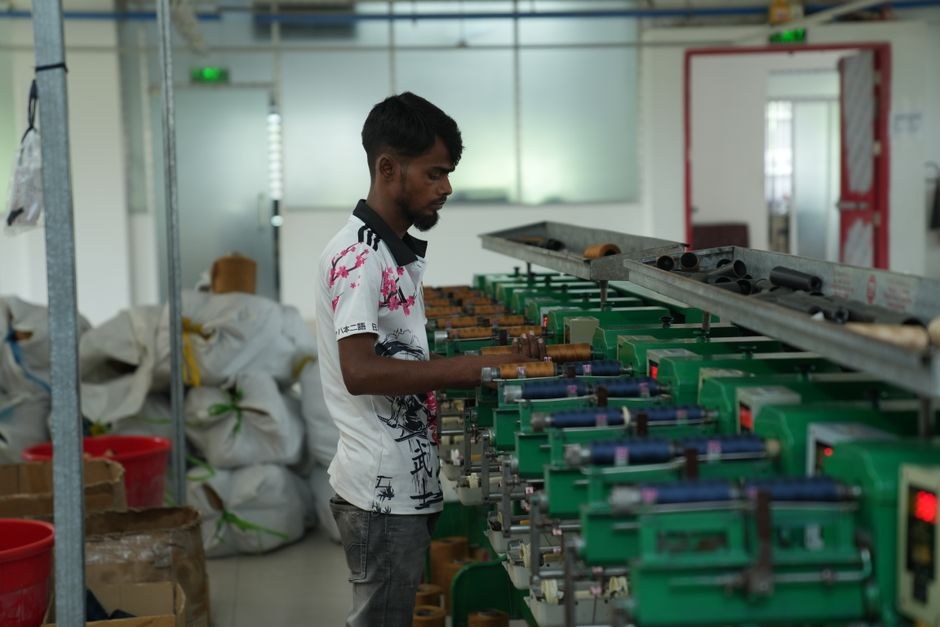
How a winter slippers supplier manages peak-season capacity, what it means for your order timing, and how to secure production slots without overpaying.
Most buyers treat capacity as a black box: you place an order, and the factory either delivers on time or it doesn't. But the supplier's calendar is not a secret. Understanding how a winter slippers supplier fills its lines from late spring through early autumn tells you exactly when to commit, what to expect from a cotton slippers manufacturer, and where the real risks sit.
Why Peak Season Is a Capacity Problem, Not a Demand Problem
Demand for winter slippers is predictable. The challenge is that production capacity is finite and shared across every buyer who wants delivery before the cold sets in. A factory running at full capacity in September cannot add another line overnight; the constraint is not orders but machine time, skilled operators, and drying space for cotton uppers.
That means the supplier's job during peak season is allocation, not sales. When you ask for a late order, you are asking the factory to push someone else's confirmed slot. Some suppliers will do it for a premium; most will not, because breaking commitments damages the relationships that keep their lines full year-round.
The Supplier's Capacity Calendar: What Happens Behind the Scenes
Most factories divide the year into three rough phases. Exact months vary, but the logic is consistent across the industry:
- Low season (roughly late winter to early spring): sampling, tooling, material trials, and small runs. Lead times are shortest and negotiating room is widest.
- Ramp-up (late spring to early summer): bulk material orders are placed, lines are assigned, and production slots are booked against expected demand. This is when serious buyers lock in their position.
- Peak (late summer to early autumn): lines are saturated. Every new order either displaces existing work or gets pushed to a later window. Quality risk rises because inspection capacity is stretched, not because standards drop.
A supplier managing peak well does two things: it protects a buffer of capacity for existing customers, and it stops accepting new orders before the buffer is gone. If a factory claims unlimited capacity in September, ask what it is turning down.
How Capacity Decisions Affect Your Order
When you understand the supplier's calendar, several practical outcomes follow.
Your delivery date is a function of when you commit, not when you need the goods
A factory can ship in six weeks in April and sixteen weeks in September for the same order. The difference is queue position, not production speed. If your retail launch is fixed, work backwards from the supplier's peak, not from your own calendar.
Price flexibility exists outside peak windows
Suppliers rarely discount unit cost during peak because capacity is the scarce resource. In low season, the trade-off changes: a factory with idle lines is more open to price discussion, smaller MOQs, or compressed sampling schedules. Use that window to negotiate terms that carry into peak.
Quality risk is not evenly distributed
Factories maintain quality standards, but inspection bandwidth is finite. Orders placed at the edge of capacity get less attention per pair. If your order lands late in the season, budget for third-party inspection rather than assuming the factory's own QC will catch everything.
What Buyers Can Do to Secure Capacity
You do not need to be the largest customer to get reliable slots. You need to be predictable and easy to plan around.
- Share forecasts early. A supplier cannot reserve capacity for a number you haven't given. A rough quarterly estimate with a firm commitment closer to production is more useful than a late firm order.
- Place deposits on time. A slot is only as good as the commitment behind it. Late deposits move you to the back of the queue, regardless of what the contract says.
- Avoid mid-season design changes. Once lines are assigned, a fabric or size-run change forces rescheduling. Approve samples before the ramp-up window closes.
- Ask about the supplier's peak load. A direct question — what percentage of your lines are committed in September — tells you more than a glossy brochure.
- Consider split shipments. If you cannot commit to a full peak order, a low-season production run for part of your range can reduce pressure on the peak window.
Buyers who treat capacity as a shared constraint, rather than an obstacle to negotiate around, tend to get the slots they need even when the market is tight.
Practical Takeaways for Your Next Order
If you take nothing else from this, take the timing. Talk to your winter slippers supplier about capacity before you need it — ideally in the low season, when there is room to discuss samples, MOQs, and delivery windows without pressure. Confirm in writing which production window your order occupies, not just a ship date. And if your volumes are growing, ask whether your supplier's peak allocation can grow with them; a factory that plans capacity transparently is a better long-term partner than one that promises everything and delivers late.
For buyers sourcing custom cotton slippers or bulk house slippers, the most useful preparation is a realistic calendar and an honest conversation about what the factory can actually absorb. That conversation is worth having in March, not September.