Understanding MOQs for OEM Cotton Slippers: A Buyer's Guide
2026-10-21 · MOQ, OEM cotton slippers, sourcing tips, negotiation, wholesale
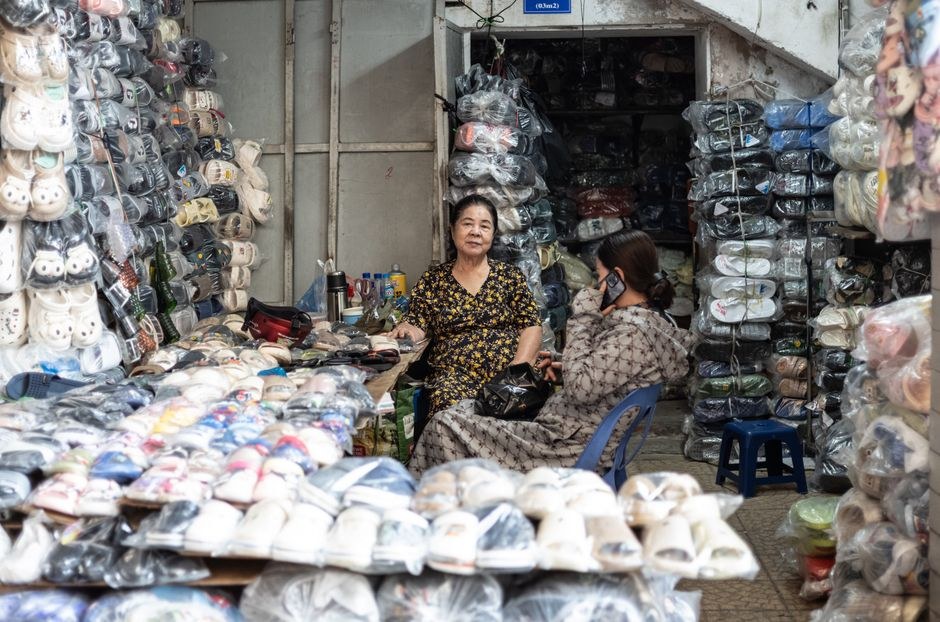
A practical guide to minimum order quantities for OEM cotton slippers, explaining what drives MOQs and how buyers can negotiate lower minimums with a manufacturer.
Most buyers who ask a cotton slipper manufacturer for a price on 500 pairs get a number that looks nothing like the one quoted for 5,000. That gap is the MOQ effect, and it catches out first-time OEM buyers more often than any other issue. Understanding what drives MOQs — and where a factory has room to move — is the difference between testing a design affordably and tying up cash in stock you cannot sell.
What an MOQ Really Covers
A minimum order quantity is not arbitrary. It reflects the fixed costs a factory must recover before a single pair is profitable: setting up cutting dies, scheduling a production line, buying fabric in mill minimums, and running a sample through approval. For OEM cotton slippers, those fixed costs are spread across the order, so a small run carries a higher unit price.
Two orders can have the same headline MOQ but very different economics. A factory might quote 1,000 pairs for a stock colorway but 3,000 for a new sole mold or custom embroidery. Ask what the MOQ is based on — fabric, tooling, or line time — because that tells you which lever to pull when negotiating.
It also helps to know your supplier’s role. A cotton slipper manufacturer that owns its cutting and stitching lines has more flexibility on small runs than a trading company that must place your order with a third-party factory. If you are comparing quotes, confirm whether the MOQ is the factory’s own or a mark-up on someone else’s.
Why MOQs Differ Between Factories
Factory size, specialization, and current capacity all shape the number you are quoted. A large plant set up for container-load volumes may simply not be able to run 500 pairs without disrupting a bigger client’s schedule. A smaller workshop may welcome the order but lack the fabric buying power to keep your unit cost competitive.
Other variables include:
- Material minimums. Mills often sell fabric by the roll; a custom color or weight may require you to commit to a full roll, which sets a floor on your order.
- Tooling and molds. New sole molds or printed designs carry one-time costs that only make sense at higher volumes.
- Production scheduling. Factories reserve line time in blocks; a small order may be slotted around larger runs, which can extend lead times.
- Packaging. Custom printed boxes and labels have their own minimums, sometimes higher than the slippers themselves.
None of these are arbitrary. Each represents a real cost the factory must cover. The question is not whether the MOQ is justified but whether you can structure the order to make it work for both sides.
Strategies to Negotiate Lower MOQs
Negotiation works best when you give the factory a reason to say yes. The most effective approach is to reduce the factory’s risk and fixed cost, not simply to ask for a favor.
- Start with stock materials and colors. Choosing a fabric and color the factory already carries removes mill minimums and shortens setup. You can test a design at a lower MOQ and switch to custom materials once the style proves itself.
- Accept a higher unit price. A smaller run costs more per pair; that is fair. If you need 500 pairs, expect to pay a premium rather than the bulk rate. Frame it as a trial order and be transparent about your plans to scale.
- Combine styles in one order. If the factory can run multiple colors or sizes of the same construction together, the total order may meet the MOQ even if each variant does not. Confirm how they count mixed orders.
- Offer a forecast. A factory is more willing to bend on the first order if you show a realistic plan for repeat business. Share your sales projections and be prepared to commit to a follow-up order if the trial sells through.
- Use a simpler construction. Fewer panels, standard soles, and basic packaging all reduce setup time. Save the complex design for when volume justifies it.
- Ask about sample or trial runs. Some factories offer a small paid trial batch outside normal MOQ rules. It is not a guarantee, but it is worth asking about early in the conversation.
Each of these trades something — price, variety, or commitment — for flexibility. Decide in advance which you can afford.
MOQ Terms to Confirm Before You Commit
An MOQ quoted in an email is not a contract term. Before you pay a deposit, make sure the following are written into your order confirmation:
- Whether the MOQ is per style, per color, or per order. A 1,000-pair MOQ per color is very different from 1,000 pairs total across three colors.
- What happens if you reorder. Some factories set a lower MOQ for repeat orders of the same style; confirm this in writing.
- Sample costs and whether they are credited. Sample fees are sometimes deducted from the bulk order — ask.
- Lead time at your order size. Small orders may be scheduled around larger ones, so the quoted lead time may not apply.
- Payment terms. A lower MOQ often comes with stricter deposit terms; balance this against your cash flow.
Ambiguity here is where small orders go wrong. A cotton slipper factory that is clear about these points up front is usually easier to work with on larger orders later.
What to Do Before You Request a Quote
Before approaching any supplier, work out your own numbers. Decide the maximum you can invest in a trial, the unit cost you can absorb at that volume, and the sales you need to justify a reorder. With those figures in hand, you can ask specific questions rather than accept the first MOQ you are given.
When you contact a manufacturer, state your target quantity, your timeline, and your plans beyond the first order. Ask directly: “What is the MOQ for this construction, and what would it be if we used your stock fabric?” That single question often reveals more flexibility than a general inquiry.
Finally, treat the MOQ conversation as the start of a relationship, not a one-off transaction. A supplier who works with you on a small first order is more likely to prioritize your production slot when you scale. Negotiate lower MOQs by making the factory’s risk smaller, and you will get a straighter answer — and a better price — than by pushing for a discount alone.