How to Calculate Landed Cost for Wholesale Cotton Slippers from China
2026-10-10 · landed cost, cotton slippers wholesale, import duty, freight calculation, supplier negotiation
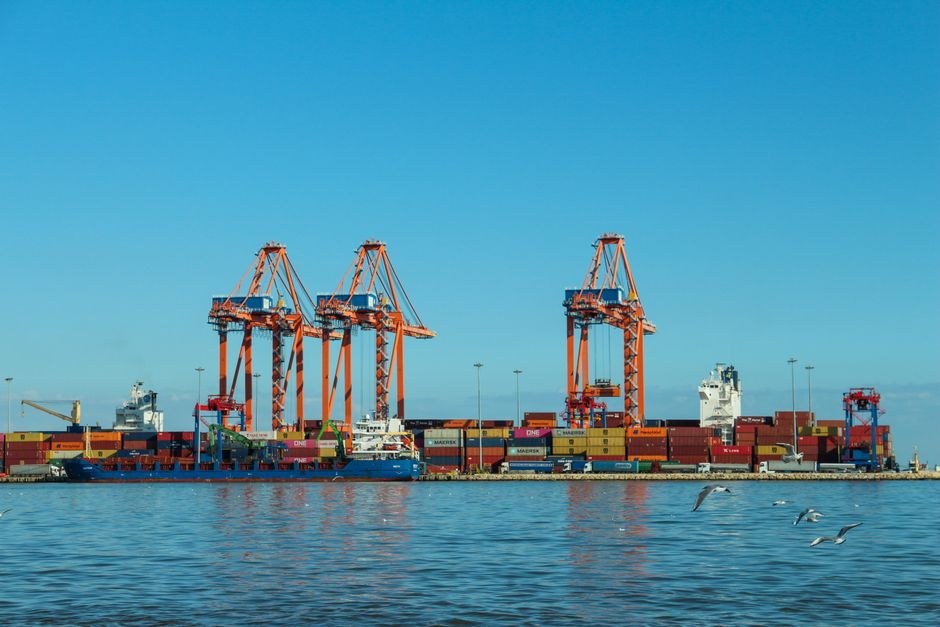
Landed cost decides your real per-pair margin. Work through freight, duty, customs fees and hidden charges before you negotiate price with a supplier.
The fastest way to lose money on a slipper container is to negotiate a unit price, then treat freight and duty as an afterthought. Buyers who quote off FOB price alone routinely find that a pair landing at what looked like a strong margin is actually break-even once the invoice clears customs. Work the landed cost backwards before you commit to volume.
Start From the Factory Gate, Not the Sea Port
Ask your cotton slippers manufacturer to quote the same order under at least two Incoterms: FOB and either DDP or CIF. The gap between them tells you what the supplier thinks freight and duty will cost, and whether they are better at logistics than you are.
FOB means you own the product once it is loaded at the Chinese port. You arrange and pay for the ocean freight, insurance, port charges and import clearance. That is more work, but it is also where cost control lives. DDP means the factory or its forwarder delivers to your warehouse with duty paid — convenient, but you will rarely see a transparent breakdown of the markup inside that number.
A common mistake: buyers ask for a DDP number because it looks like a single clean figure, then never audit how much of it was freight versus padding. On bulky items like house slippers, where volume is high relative to value, freight can be a larger share of the equation than the product itself. Understand that split before you sign.
The Cost Stack Between FOB and Your Warehouse
Every quote you build should include the following lines, each with its own number. Skip any one and your margin estimate is fiction.
- Ocean freight — quoted per CBM or as a lump sum. Get this for a specific sailing, not a vague seasonal estimate.
- Marine insurance — usually a fraction of a percent of CIF value, but you want the actual figure, not a guess.
- Origin charges — document fees, customs clearance at the Chinese end, and in some quotes a terminal handling charge split between buyer and seller.
- Destination port charges — terminal fees, security fees and port service charges vary widely by country and by port.
- Import duty and VAT/GST — depends on your HS classification. Slippers are not one uniform item under most tariff schedules; textile uppers and rubber soles can land in different categories with different rates.
- Customs broker fee — a fixed fee per entry, often plus a documentation handling fee.
- Inland delivery — port to your warehouse, including any drayage or container detention if you are slow to unload.
- Inspection and testing — if your market requires compliance testing, budget for it per shipment or per style.
Add an allowance for currency movement. If you buy in USD and sell in another currency, the exchange rate at order confirmation and at invoice settlement are rarely identical. A stranded cent or two per pair does nothing on its own, but across a season of reorders it adds up.
Turning the Total Into a Per-Pair Number
This is the part most buyers skip. A total landed cost of, say, a five-figure number over a full container means nothing to your pricing team. You need the cost per pair, and you need it separated into product cost and logistics cost.
Two questions to answer:
- What percentage of total landed cost is the ex-works or FOB price, and what percentage is freight, duty and fees?
- What is the landed cost per pair for your best-selling size, not your average size?
That second question matters more than it sounds. Cotton and plush slippers pack by volume, not by weight. A carton of size 36-37 slippers may hold more pairs than a carton of size 44-45, even though they ship in the same container. If your best-selling size happens to be the bulky one, your freight cost per pair is higher, and a blended average will hide that.
Also build in a waste factor. Nothing is 100% sellable. A small allowance for culled or damaged pairs is standard in this category, and you should decide whether that allowance sits in the landed cost or in shrinkage. If you do not put it somewhere, it becomes an unpleasant surprise at the accounting level.
Using Landed Cost to Talk to Your Supplier
Once you know your landed cost per pair, the conversation with a cotton slipper factory changes. You can ask whether the carton configuration can be revised to improve container utilisation, or whether a slightly thinner sole would cut weight enough to matter. On high-volume or house slippers wholesale orders, small structural changes to packaging sometimes move the freight cost more than a negotiated cent on the FOB price.
Also get clarity on MOQ. A lower minimum order quantity sounds attractive in isolation, but if it pushes you into LCL shipment, you inherit consolidation fees and longer transit times. An FCL order at a slightly higher MOQ is often cheaper per pair landed, even if the unit price is identical.
Landed cost is not a number you look up. It is a number you build from assumptions you verify before the order ships.
What to Do Before Your Next Order
Build a landed cost sheet before you ask for a second quotation. Model it at two or three order volumes, because the cost per pair changes with volume, and again at two freight rates, because a spot rate and a contract rate tell different stories. Run a cost sensitivity check: if freight doubles and duty stays flat, does your retail price still make sense? If it does not, you have just found your real exposure.
Then verify the assumptions you cannot control. Confirm the HS classification for your specific slipper construction with your customs broker before you import — a wrong code can mean a refund claim or a penalty, depending on which way the error runs. Ask your supplier to confirm carton weight, dimensions and carton count precisely; estimates here corrupt every downstream number. Get the freight quote in writing for a named port pair and a named transit time.
Put these onto a one-page template. Each order updates four or five inputs, and you get a current per-pair landed cost in minutes rather than reconstructing it from memory after the invoice arrives. Buyers who maintain that discipline are the ones who know, before they commit, whether a promising price is actually a good landed cost.