Custom Embroidered Slippers: From Design File to Stitched Logo
2026-10-25 · embroidery,cotton slippers,OEM sourcing,quality control,buyer guide
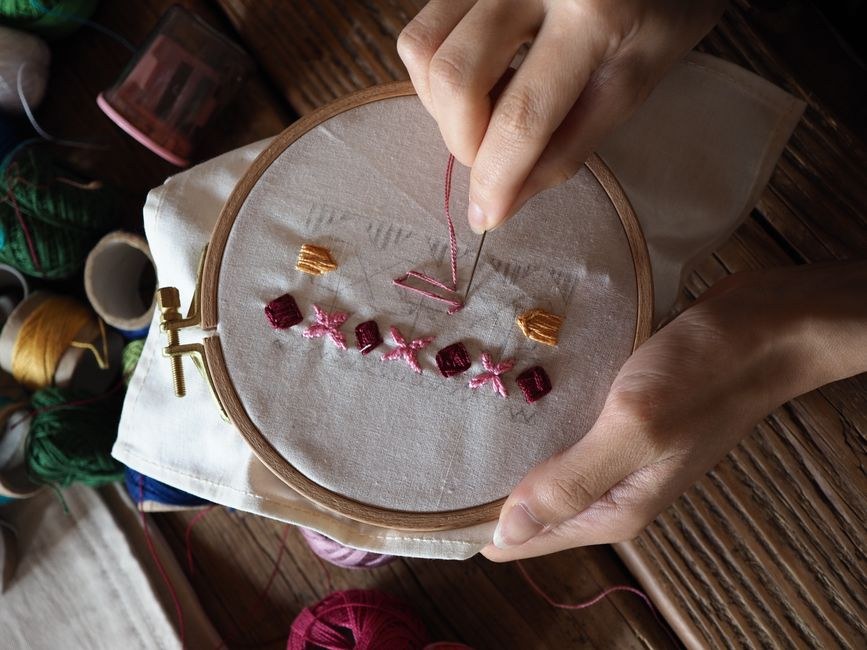
How custom embroidered slippers move from a digitized design file to a stitched logo, including stitch trials, cost drivers and quality checks buyers should manage.
Embroidery is the part of a custom slipper order that buyers most often underestimate. It looks like a simple logo placement, but the result depends on a file your factory can actually run, a stitch test you approve in writing, and a bulk check that catches drift before cartons ship. Get any of those wrong and the damage is visible on every pair in the order.
Start with a file your factory can run, not a flat image
A PNG pulled from your brand kit is not an embroidery file. In production it becomes a stitch program, which means an embroidery machine needs to know where each stitch lands, in what order, and at what density. The conversion step is digitizing, and the quality of that file determines whether your logo reads cleanly at 3 cm or turns into a blob.
Four things in a design make digitizing harder or easier:
- Size relative to detail. Thin lines, small text and tight counters close up quickly on a slipper vamp. Serif typefaces below a certain size rarely survive. If your logo has a tagline, expect to drop it or set it as a separate element.
- Stitch type. Satin stitch suits small fills, letters and borders. Fill stitch covers larger areas faster. Run stitch handles outlines. Tight, heavy fills on soft cotton pile can stiffen the upper, so discuss density rather than assuming more is better.
- Underlay and backing. Embroidery on terry, velour or plush is not embroidery on a flat woven shirt. Cut pile swallows stitches, so a factory normally adds underlay and may use a backing layer to stabilise the logo.
- Color count and thread range. Each color adds a thread change. A four-color logo is workable; a photographic gradient is not. Ask which thread chart the factory stocks and confirm the closest matches before anyone stitches.
Ask your custom embroidered slippers manufacturer to send the digitized file back for review before any physical sample is made. You do not need embroidery software to judge it. Open the file or its preview, check that curves are smooth, letters are legible, and the stitch direction is consistent.
Prove the logo on the actual fabric through a stitch trial
A logo approved on a cotton twill swatch tells you little about the same logo on a brushed terry upper. The fabric surface is half the result. Insist on a stitch-out on the exact material, color and pile height you intend to order. If your range combines several materials, ask for one trial per material.
When the trial arrives, judge it against real criteria rather than a glance:
- Text legibility at the final size, viewed at arm's length and at retail distance.
- Logo edges: clean and crisp, not ragged where stitches sink into pile.
- Puckering or dimpling around the motif, which signals tension or backing problems.
- Registration between colors, if the logo has more than one.
- Shape definition after a light hand press, since slippers get compressed in transport.
- Color match to your brand reference under daylight and indoor light.
Approve or reject in writing, and attach a photo of the approved piece to the purchase order. The approved trial, not the digital file, becomes the reference for bulk. Keep a physical copy too, because photos drift in color and a physical standard ends arguments.
Two practical notes for OEM cotton slippers with placement-specific logos: embroidering the vamp, the side panel and the heel each behave differently because the hoop sits at a different angle. A logo that works on the vamp does not automatically work over the side seam. Test every placement you plan to sell.
Where embroidery changes your cost and timeline
Embroidery is usually priced per stitch count plus setup, not per pair at a flat rate. That single fact has consequences worth planning around.
- Stitch count is the cost lever. A modest 3,000-stitch logo and a dense 10,000-stitch badge sit in different cost bands. Design changes that reduce stitches, such as simplified letters or dropped detail, save money across the whole run.
- One-time digitizing. Expect a one-off charge to create and revise the file. A factory may waive or credit it against a confirmed bulk order; that is normal to ask and normal for them to decline.
- Thread changes add time. Multi-color logos slow the machine. If your margin is thin, an embroidered logo that needs four colors may be a poor fit for an entry-price line.
- Sampling adds days. Digitizing, a stitch trial and a revised trial can add a week or more to a schedule that already includes fabric and upper sampling. Build it into your calendar, especially if you are supplying winter ranges with a hard in-store date.
- Labor and reject risk. Hooping and trimming are manual. Logos placed slightly off-center are the most common embroidery defect, so bulk QC has to check placement, not just stitch appearance.
Typical bulk pricing from a cotton slippers manufacturer will bundle the base slipper and the embroidery, which makes it hard to see what the logo costs. Ask for the embroidery portion separately so you can decide whether to embroider every SKU or only the premium one.
Quality checks that catch embroidery defects before cartons ship
Embroidery faults usually appear gradually rather than suddenly, so a single end-of-line inspection can miss drift. Build checks at two points.
During production, a quick in-line check covers thread tension, breakage, skipped stitches and color sequence. A supervisor should confirm placement against the approved trial at the start of the shift and after every needle or thread change.
Before packing, the end-of-line check should confirm:
- Placement within your tolerance. State this numerically in the order. Most defects are misalignment, not bad stitching.
- Motif size matching the approved trial, since digitizing errors or scale drift can creep in.
- Trimming quality. Loose thread tails and stray backing scraps are the flaws buyers spot first in retail.
- Backing condition. Stiff or scratchy backing on a bare-foot product is a comfort failure, not a cosmetic one.
- Pair consistency. Left and right slippers should mirror correctly, so the logo reads the same way when worn.
Ask for close-up photos of a random sample of pairs from the bulk run and compare them with your approved trial. If the embroidery is on a product destined for retail packaging, check that the embroidered element has not pulled the upper out of shape, because a distorted vamp will not fit the packaging cavity.
What to do before you place the order
Settle four things with your supplier in writing before mass production. First, the digitized file and the revised file are your property; confirm this, because a factory that can transfer a design upstream or to a competitor is a brand risk. Second, get the approved trial numbered, dated and photo-documented, and reference it in the PO. Third, agree placement tolerance and motif size in millimeters rather than in language like "centered". Fourth, ask what happens to rejects: replacement, credit, or a rework pass.
If you are evaluating a new Cixi slipper factory for embroidered work, request one trial of your logo on their standard material early and treat it as a capability test. A factory that returns a clean stitch-out with the digitized file, a written specification and honest notes on what it changed is telling you it can manage the process. One that returns a sample with no documentation is asking you to gamble.
Embroidery is small, but it is the part of the slipper that carries your brand most visibly. Spend the extra week on file review and stitch trials. It is cheaper than discovering on the container that your logo leans left on 3,000 pairs.