Quality Control for Cotton Slippers: In-House vs Third-Party Inspection
2026-10-18 · quality control,cotton slippers,inspection,sourcing,buyer guide
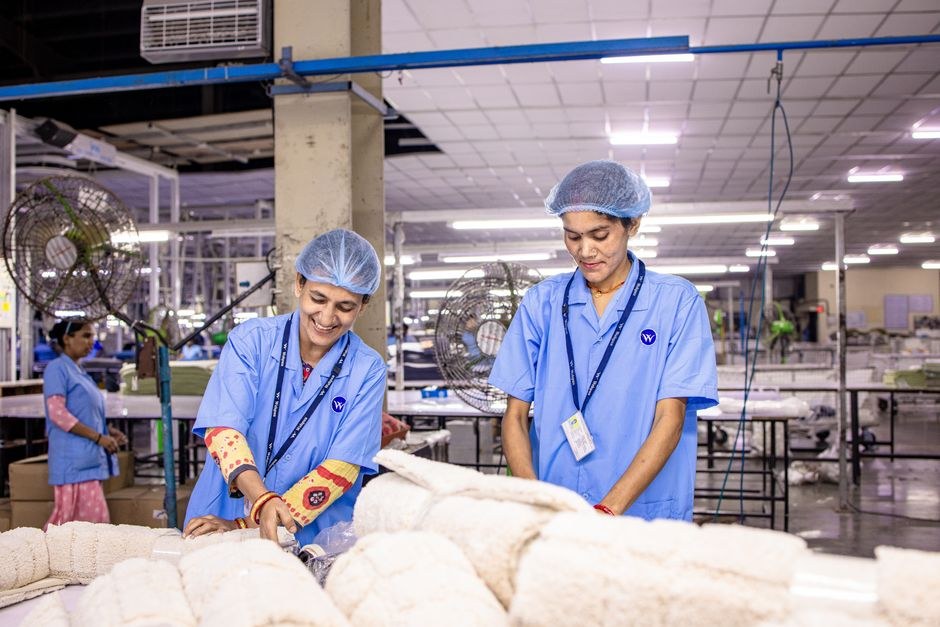
Compare in-house and third-party QC for cotton slippers. Understand costs, pros and cons, and how to decide what your order really needs.
Most quality failures on cotton slipper orders don't come from a factory's inability to make a good product. They come from a buyer's decision about who checks the goods, and when. That decision sits between two options: relying on the factory's in-house QC, or bringing in a third party. Neither is automatically the right call.
This article breaks down what each approach actually delivers, what it costs and where it fails, so you can choose per order rather than per habit.
What in-house QC actually covers
In-house QC is the cotton slippers manufacturer's own inspection routine. A well-run factory will inspect at three points: incoming materials (fabric weight, color consistency, sole bonding), in-line checks during stitching and assembly, and a final audit before packing. For established factories, this is a continuous process, not a one-off event.
The advantages are straightforward:
- Cost. In-house inspection is included in the unit price. A third-party inspector typically charges a day rate plus travel, and a mid-sized order may need two or three visits.
- Speed. Problems get caught and corrected on the line. A third-party inspector who visits once at the end can only report defects, not prevent them.
- Context. The factory knows its own process and can trace a defect back to a specific machine, operator or fabric lot.
The limitations matter just as much. In-house QC answers to production schedules. When a shipment is running late, the pressure to pass marginal goods is real, even at factories with good intentions. And if your OEM cotton slippers have a defect the factory doesn't consider a defect — a slightly loose sole edge, a color that's a half-shade off your approved sample — in-house inspection won't flag it.
What third-party inspection adds
A third-party inspection firm sends an independent auditor to check your goods against your spec, usually using an AQL sampling plan. The appeal is independence: the inspector has no stake in whether the shipment passes.
For house slippers wholesale buyers, third-party inspection earns its cost in a few specific situations:
- First order with a new factory. You have no track record, and the factory has no track record with you. An independent check establishes a baseline.
- High-value or private-label orders. If your brand is on the product, a defect that reaches retail is a brand problem, not just a unit problem.
- Complex or multi-material designs. Embroidered logos, printed soles or mixed fabric panels create more places for errors to hide than a plain terry slipper.
- You can't visit. If you're sourcing from overseas and can't be on-site, third-party eyes are the next best thing.
The trade-offs are real. Third-party inspection is a snapshot, not a process. A single final inspection catches defects that already exist; it doesn't stop them being made. Cost adds up on large, multi-SKU orders. And an inspector checks against your spec — if that spec is vague, the report will be vague too.
Where each approach tends to fail
The most common failure with in-house QC is specification drift. The factory inspects against its standard, not yours. If your approved sample had a denser terry lining and the production run uses a lighter one, in-house QC may pass it because it meets the factory's baseline. That's not dishonesty; it's a different reference point.
The most common failure with third-party inspection is timing. Buyers often book a final inspection when goods are 100% packed. By then, fixing defects means unpacking, reworking and repacking — and the ship date is at risk. An inspector's report at that stage is useful for negotiation, not for correction.
There's also a cost trap on small orders. For a low-volume trial run of a new winter slippers supplier design, a third-party inspection fee can rival the value of the margin you're testing. In that case, in-house QC plus a detailed spec and a pre-production sample review is often the more sensible spend.
A practical decision framework
Don't decide once for all orders. Decide per order, using these questions:
- Is this a new factory relationship? If yes, budget for third-party inspection on the first two or three shipments, then reassess.
- What's the cost of a defect reaching the customer? Plain white slippers for a discount chain and branded slippers for a specialty retailer carry very different risk.
- How detailed is your spec? If you've supplied a tech pack with fabric weight, stitching tolerance, sole hardness and color references, in-house QC has something concrete to check against. If your order is "like last time," neither method will protect you.
- Where can you intervene? If you can schedule a mid-production visit, third-party inspection is more valuable there than at final packing.
A common middle path: use in-house QC for routine repeat orders with a factory you trust, and bring in third-party inspection for first orders, new designs or any shipment where your spec has changed.
What to do before your next order
Before you choose an inspection method, fix the thing that makes either method work: a written, measurable spec. Include fabric weight and composition, stitching density, sole material and hardness, color references, packaging details and your sampling plan. Without that, in-house QC is guessing and third-party inspection is measuring against nothing.
Then, when you place your order with your cotton slippers manufacturer, agree on inspection points in advance — materials, in-line and final — and who attends each. If you're using a third party, book the inspection slot at order confirmation, not when production ends. And ask the factory what its in-house pass rate looks like and how it records defects; a factory that tracks defects by type is usually a factory that fixes them.
The goal isn't to pick a side. It's to know which risks you're carrying and pay only for the checks that reduce them.